Chat case
AI interior design from a photo of your room: three new looks, a shopping list and a no-drill version

Most AI room design tools want an upload page, a sign-up and a style menu. Here the photo goes into a chat. We sent our test agent an ordinary shot of a plain rented living room and asked for three looks: light Scandinavian, warm japandi and something bolder. All three came back in 94 seconds, with the same window, the same floor and the same grey sofa. Two more messages turned the favourite into a shopping list and a version a renter can actually build. Below are the real replies, the pictures and the cost.
The short answer
Take a photo of the room from the doorway, send it to the agent and say three things: which styles you want to see, what must stay as it is, and that you want the same room from the same angle. Our request fit in four sentences. Three redesigned pictures came back in the same chat 94 seconds later.
Then keep going in the same conversation. Pick the version you like and ask what you would need to buy to get it, and what from your room stays. Ask for a version with your own furniture and only the things you can take with you when you move out. Each answer builds on the photo and the pictures already in the chat.
This is AI interior design for a room you already live in. If you want a room picture from scratch, for a mood board or a post, see An AI image generator inside your chat: six prompts and the pictures they made.
The test: a plain rented living room
Most people who search for AI interior design are not planning a renovation. They look at a room they already have and want to see it working better before they spend a weekend and a budget on it. Very often the room is rented: the walls, the floor and the window are not theirs to change.
So that is our room. A small living room in a city flat, shot on a phone from the doorway: off-white walls, light laminate floor, a window with thin white curtains and a radiator under it, an old grey two-seat sofa, a small white coffee table, a pine bookcase with a plant on top and a paper shade on the ceiling.
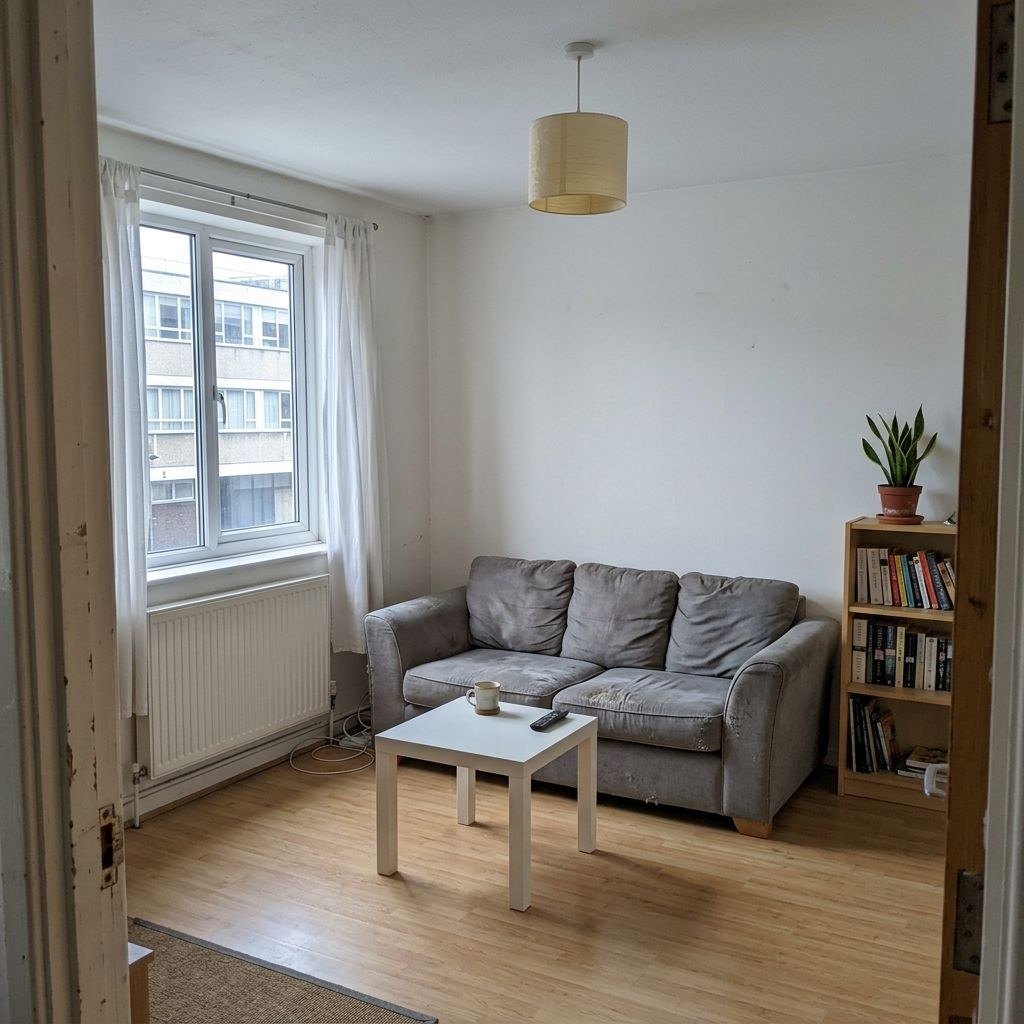
We generated this photo for the test, so it shows no real home. Everything after it is real: on 31 October 2026 we sent it to our test agent on the default model and asked for the redesigns in plain words, the way you would ask a friend who is good with interiors.
Step 1. Send the photo and ask for three directions
Asking for three different styles at once is the quickest way to find out what you like. Name them, then say what must not move. The second half matters as much as the first: it tells the agent where its work ends.
The first picture arrived 84 seconds after the request, all three within 94 seconds. Here they are one by one.
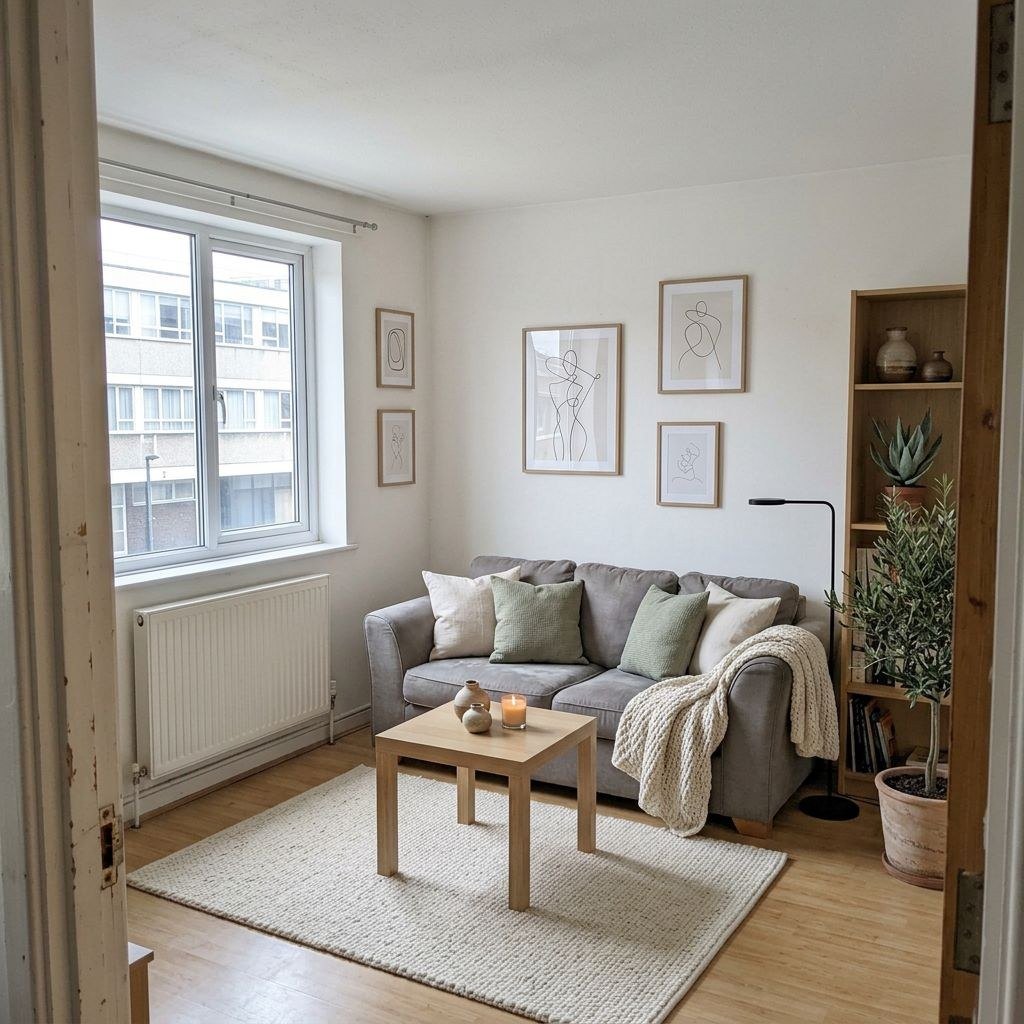
The Scandinavian version keeps the room bright and adds what it lacked: a rug that ties the furniture together, a lamp for the evening, a tree in the corner and something on the empty wall. The white coffee table became pale oak, and the cushions repeat the sage of the plant.
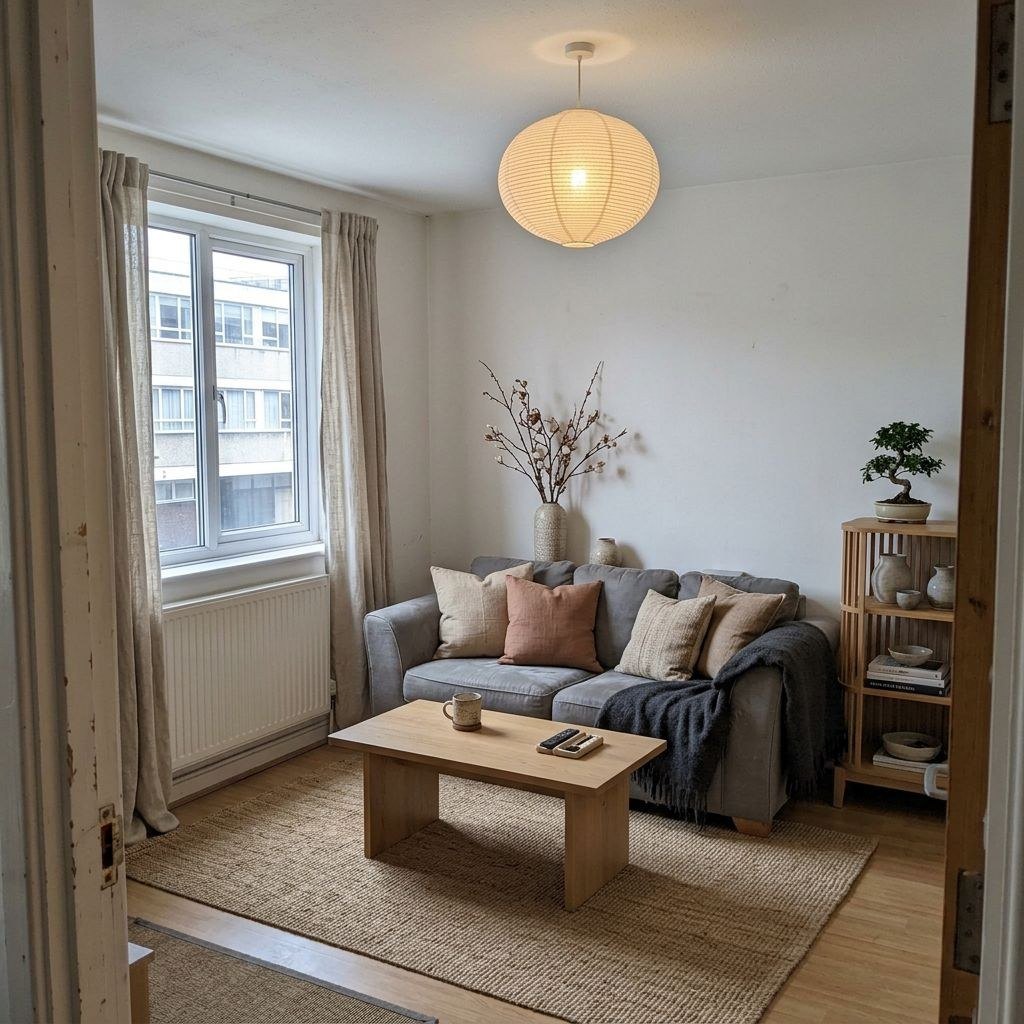
The japandi version changes the mood more than the furniture. Heavy linen curtains to the floor, a jute rug, a low oak table and a paper lantern turn a cool afternoon room into a warm one. Here the bookcase became an open oak shelf with ceramics and a bonsai.
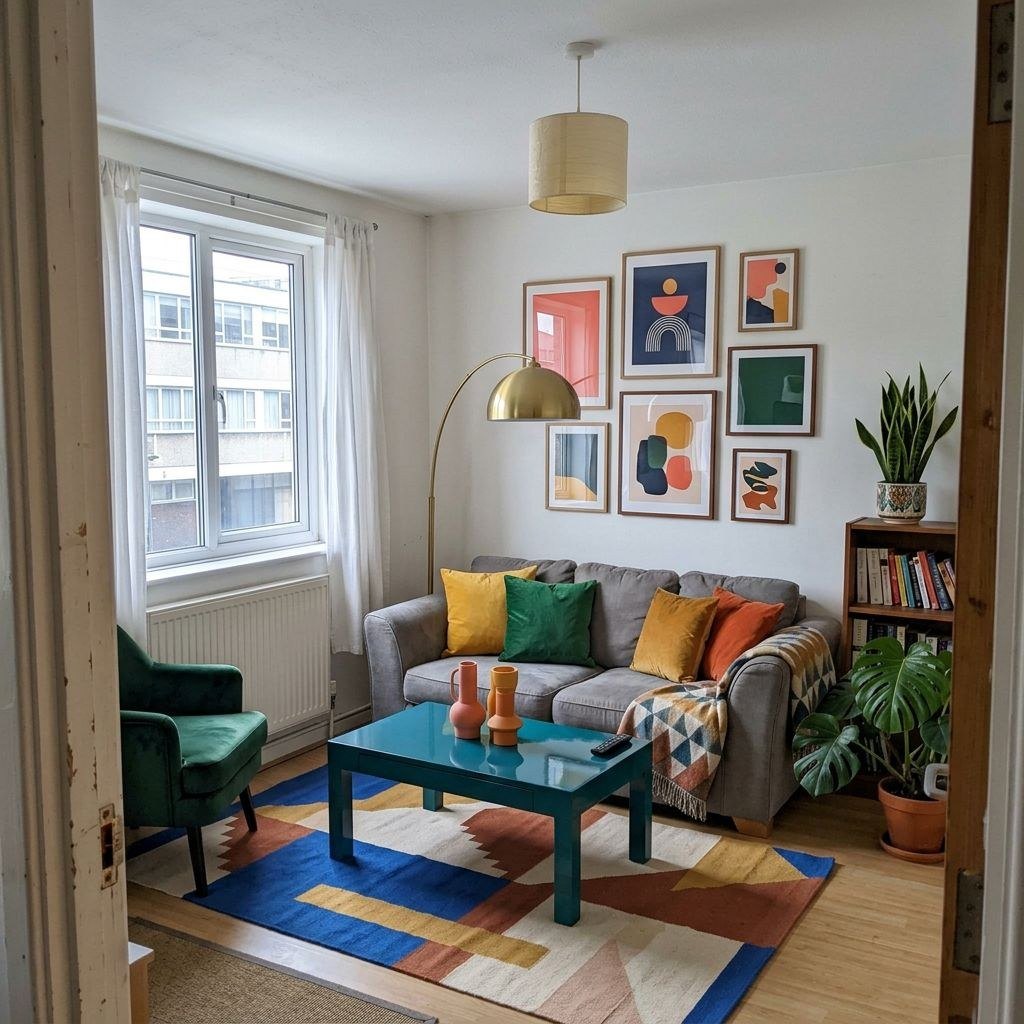
The bold version puts all of the colour into things you can carry out of the door: a geometric rug, a gallery of prints, cushions, a velvet armchair and a teal table. The walls stay white, exactly as the request said.
Look at what did not change in any of the three. The window frame, the radiator, the curtain rod, the door frame on the left and the grey sofa with its shape and arms are where they were in the photo. That is the difference between redesigning your room and generating a pretty room: you can stand in the doorway and compare.
Step 2. Turn the look you like into a shopping list
A picture is the start. To get the room, you need to know what to buy and what you already have. We picked the warm version and asked one question.
32 seconds. We shortened the reply a little; every line here is the agent's own.
The useful part here is not the list itself, it is how the list is built. The agent went back to our photo and sorted the room into three groups: what belongs to the landlord, what we already own and can keep, and what is new. The pine bookcase and the white coffee table stayed on the list of things we keep, with a note on when it is worth replacing the table at all.
The list also comes with sizes. A rug of about 160 × 230 cm that sits under the front feet of the sofa, cushion covers of 45 × 45 cm, a table 35–40 cm high, bulbs at 2700K. These are the numbers you need in a shop or a search bar, and they are the ones people usually get wrong. And the last line is the advice of someone who has done this before: if the budget is tight, three things carry most of the look.
At the end the agent offered to turn the list into a shortlist with a budget and current options. That is a good next message if you are ready to shop.
Step 3. A version you can actually build
The renders in step 1 show a room with new furniture. The real question for a renter is smaller: what will my room look like with my own sofa and only a few new things? We asked exactly that.
50 seconds from the request to the picture.
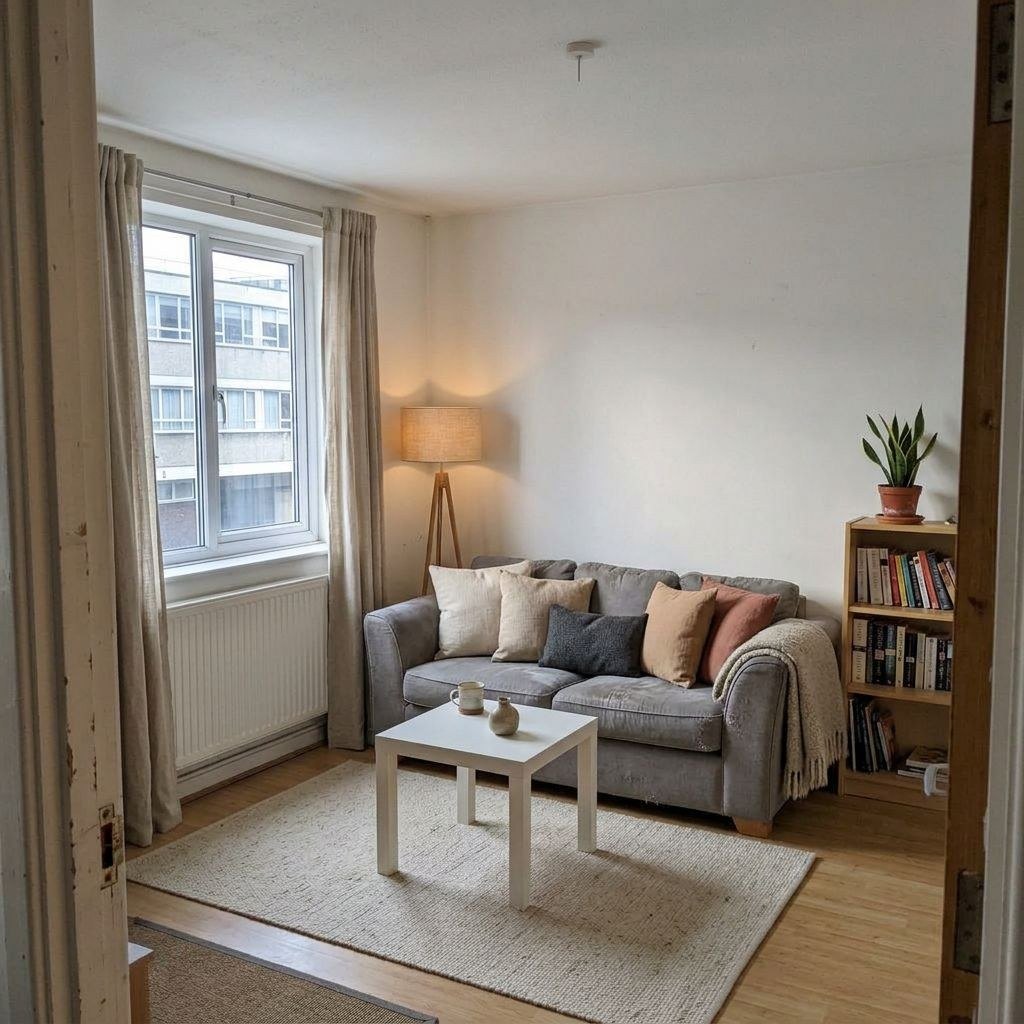
This is the picture worth saving. The sofa, the white coffee table and the pine bookcase with the books are the ones from the photo. What is new fits in a car boot: cushions and a throw, a wool rug, linen curtains on the rod that is already there and a tripod lamp in the corner by the window. The room is not the magazine version from step 1, and it does not need to be. It is warmer, softer and finished, and it is reachable this month.
The agent also updated the shopping list without being asked. It noticed that the floor lamp replaces the paper pendant from the previous list and said so in one line, so the list from step 2 stays valid with one change.
What we got from one phone photo
Three messages, under three minutes of the agent's work in total. From a photo of a plain rented room we got:
- three redesigns in different styles, with the same window, floor, door and sofa as the photo;
- a shopping list sorted into what stays and what to buy, with sizes and rules for a rented flat;
- a version of the favourite look built from the furniture we already own and a handful of new things.
Nothing was installed. There was no sign-up page, no style quiz, no 3D model to draw. Each step was one message in the same chat as the rest of the conversation.
How to ask so the room stays your room
The agent changes what you ask it to change. How you ask decides how much of your room survives. A few habits from this test:
Shoot from the doorway, at standing height. It is the view you will compare against every day, and it shows the window, the floor and most of the furniture in one frame. Daylight with the ceiling light off gives the cleanest result.
Say what stays, not only what changes. “The walls, the floor and the window stay as they are, and the grey sofa stays” drew a line around the work. The agent repeated it back in its first line before sending any picture.
Ask for contrast first, detail later. Three different styles in one message show you more about your own taste than ten versions of one style. Once you know the direction, refine it piece by piece.
Say who you are in the room. “It's rented” changed the whole shopping list: curtains on the existing rod, a lamp that plugs in, a rug on an anti-slip pad. The same works for “I have a cat”, “a toddler crawls here” or “I work from this sofa”.
Check every item you want to keep is still in the picture. In the renter version the paper ceiling shade went away together with the pendant swap. If something you own and love is missing from a render, name it and ask for it back in the next message.
Ask for sizes before you shop. A rug that looks right in a picture can be too small in the room. Ask the agent for dimensions, as it gave here, and measure the room once before you order.
Which style words do what
The three directions in our test changed very different things, and it is worth knowing which word moves what before you ask.
Scandinavian keeps the light and adds order: pale wood, cream wool, one or two muted colours, a tidy wall of frames and plants. Good for a room that feels empty or cold.
Japandi changes the mood through materials and light: heavy linen, jute, low oak furniture, ceramics and a warm paper lantern. Good for a room that feels harsh or busy.
Bolder colour goes into the things that move: a patterned rug, prints, cushions, one statement chair. Good for a rented room where the walls must stay white.
You can name other styles too, or describe a feeling instead of a style: “calm, warm, lots of wood, nothing shiny”. The agent turns the description into a picture of your room either way. The same chat can also edit other photos you have, from a product shot to a picture from a trip. For that, see Edit a photo with AI right in the chat: one phone shot, three edits, before and after.
What stays with you
Your photos and the chat history stay in your agent's isolated container. To answer, the agent sends requests to the model: on the default model they go through DeepSeek's infrastructure in the People's Republic of China, which you confirm during onboarding, and on Pro you can attach your own Claude or Codex, so requests go to that provider under your own account. How the agent handles files, data and access is covered in Is an AI agent safe? 8 things to check before you let one into your chats.
What it costs
We read the balance in the agent's status line during the test. The three redesigns came to 68 in one turn: about 20 per generated picture, plus reading the photo and writing the reply. The shopping list cost less than 1 . The renter version, one more picture, was about 25 . The whole case, four room pictures and a list, came to about 100 , so the Free plan's first month covers it twice.
Reading a photo or screenshot you send costs 1.5 , and a generated image on the default model costs 20 . The Free plan gives 200 in the first month and 100 every month after, with no card. Pro costs $13.90 a month for 400 , or $1.39 for the first month if you subscribe within 7 days of signing up. All rates are on the pricing page.
Messages worth copying
This is my living room. The walls, the floor and the window stay as they are. Show me three different ways it could look: light Scandinavian, warm japandi and something bolder with colour. Same room, same angle.
I like the second one. What exactly would I need to buy to get that look, and what from my room stays? Give me sizes.
Make one more version with my own sofa, table and shelves kept as they are, and only new textiles and a floor lamp. Nothing drilled into the walls.
Mix the two: the rug and the curtains from the warm version, the cushions and the art from the bold one.
Turn this shopping list into a shortlist with a budget of 400 euros.
Create your agent, stand in the doorway of the room you have been meaning to change, and send the photo with three styles you are curious about.
Try it with your own agent
Free, no card. The agent starts working in the chat straight away.
Create your AI agentQuestions
Can AI redesign my actual room from a photo?
Yes. Send a photo of the room and say which styles you want to see and what must stay. In our test the agent returned three redesigns of a rented living room in 94 seconds, each with the same window, radiator, floor, door frame and grey sofa as in the photo.
Which interior styles can I ask for?
Any style you can name or describe: Scandinavian, japandi, mid-century, industrial, boho, a bolder colour scheme, or something like “warm, calm, lots of wood”. Asking for two or three different styles in one message is a quick way to find out what you actually like.
Will it tell me what to buy?
Ask, and it will. After we picked the warm japandi version, the agent split the room into what stays and what to buy: a jute rug of about 160 × 230 cm, floor-length linen curtains, four 45 × 45 cm cushion covers, a throw, a low oak coffee table, a paper lantern shade and 2700K bulbs, plus rules for a rented flat.
I rent, so painting and drilling are out. Is this still useful?
It is, if you say so in the request. We wrote that the walls, floor and window stay and that nothing gets drilled. The renter version kept our sofa, coffee table and bookcase, and changed only textiles and light: cushions, a throw, a wool rug, linen curtains on the existing rod and a floor lamp that plugs into the wall.
Is it free?
On the Free plan, yes. Free gives 200 in the first month and 100 every month after, with no card. A generated picture on the default model costs 20 . Our whole test, four room pictures and a shopping list, came to about 100 .
Do I need an app or a designer account?
No. The agent starts in Telegram, and other messengers can be connected. You send the room photo the way you send it to a friend, and the redesigned versions come back in the same chat.