Chat case
AI landscape design from one photo of your garden: three looks, a plant list by zone and a weekend plan

Most AI garden design tools want an upload page, a sign-up and a style menu. Here the photo goes into a chat. We sent our test agent an ordinary shot of a bare back garden and asked for three looks: gravel and grasses, a cottage garden, a family lawn. All three came back in 70 seconds, with the same fences, shed, path and apple tree. Two more messages turned the favourite into a plant list for each bed and a plan for the first weekend. Below are the real replies, the pictures and the cost.
The short answer
Take a photo of the garden from the back door and send it to the agent with three things: the looks you want to see, what must stay, and that you want the same garden from the same angle. Our request fit in five sentences. Three redesigned pictures came back in the same chat 70 seconds later.
Then keep going in the same conversation. Pick the version you like, give your climate zone, soil and where the shade falls, and ask for a plant list by zone of the garden. Then ask what to plant now and what can wait. Each answer builds on the photo and the pictures already in the chat.
This is AI landscape design for a garden you already have. For the same approach indoors, see AI interior design from a photo of your room: three new looks, a shopping list and a no-drill version.
The test: a bare back garden, 6 by 15 metres
Most people who search for AI landscape design are not hiring a designer. They look out of the back door at a patch of lawn and a fence and want to see what it could be before they spend a season and a budget on it. The fences, the shed and the path are usually staying. The question is what goes between them.
So that is our garden. A narrow back garden behind a house, shot on a phone from the back door in autumn: a patchy lawn with bare spots, a straight concrete path to an old wooden shed, brown fences on both sides, a young apple tree on the right, a strip of bare soil along the left fence and a cracked patio with one white plastic chair.
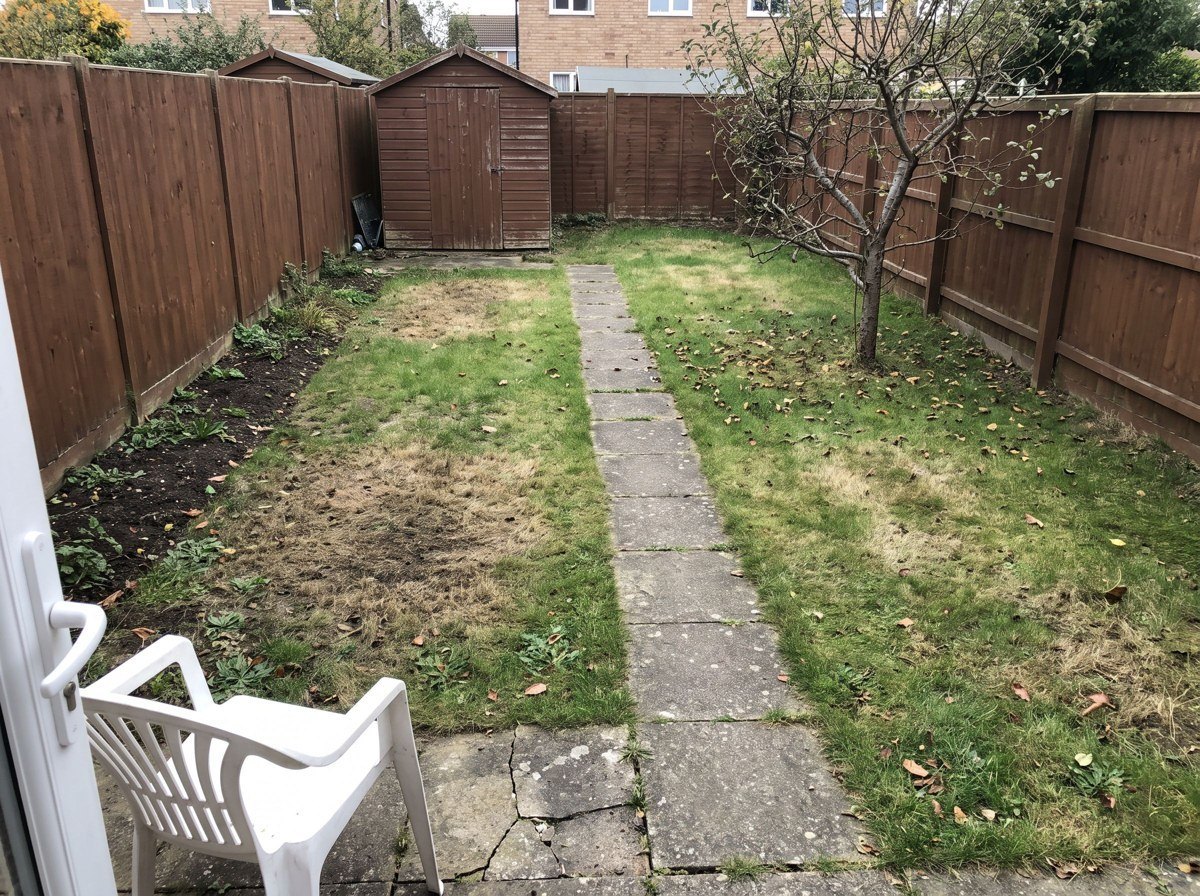
We generated this photo for the test, so it shows no real home. Everything after it is real: on 3 November 2026 we sent it to our test agent on the default model and asked for the redesigns in plain words, the way you would ask a friend who knows gardens.
Step 1. Send the photo and ask for three directions
Three different looks at once is the quickest way to find out what you want from a garden: less work, more flowers or more room to live outside. Name them, then say what must not move.
All three pictures arrived 70 seconds after the photo. Here they are one by one.
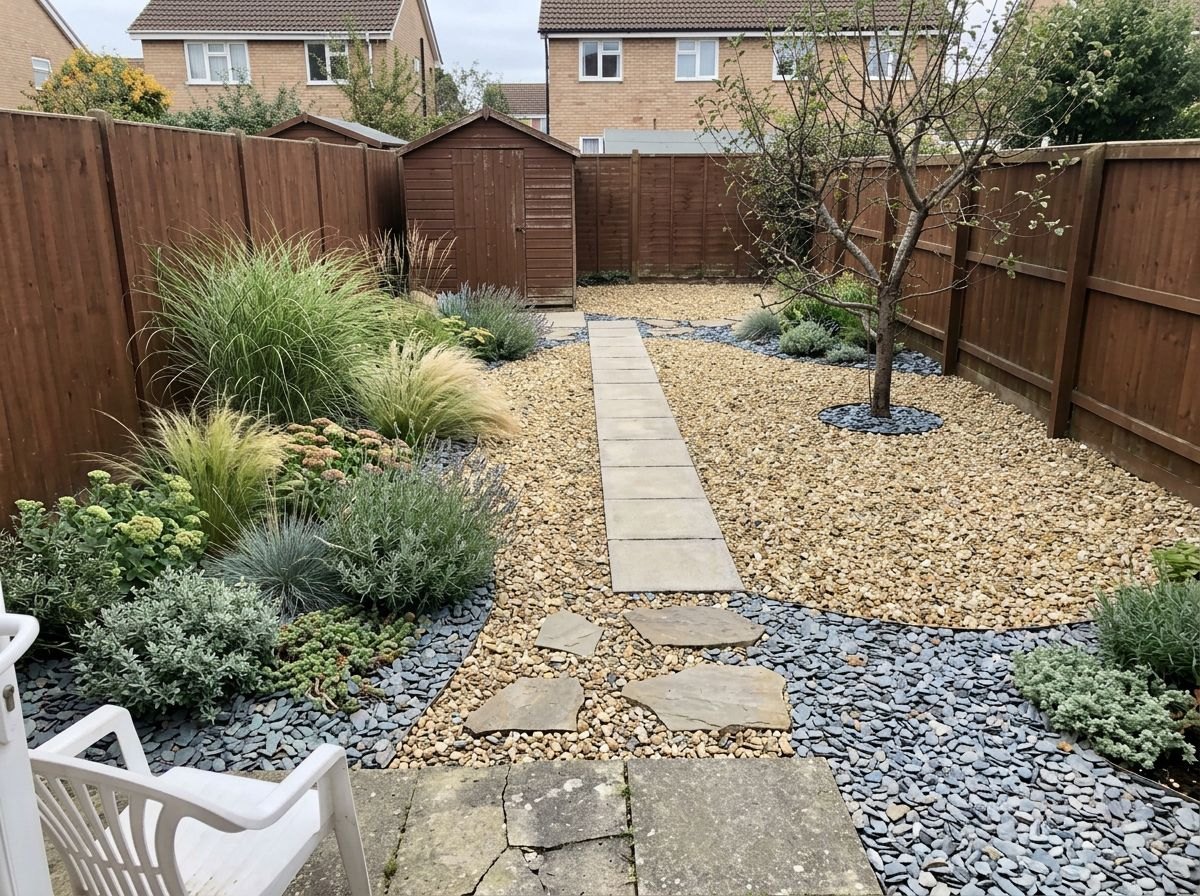
The low-maintenance version removes the thing that takes the most time in a small garden, the lawn. Golden gravel and blue-grey slate take its place, the left fence gets a deep border of grasses, lavender and sedum, and the apple tree sits in a neat ring of slate. A few stepping stones join the patio to the old path.
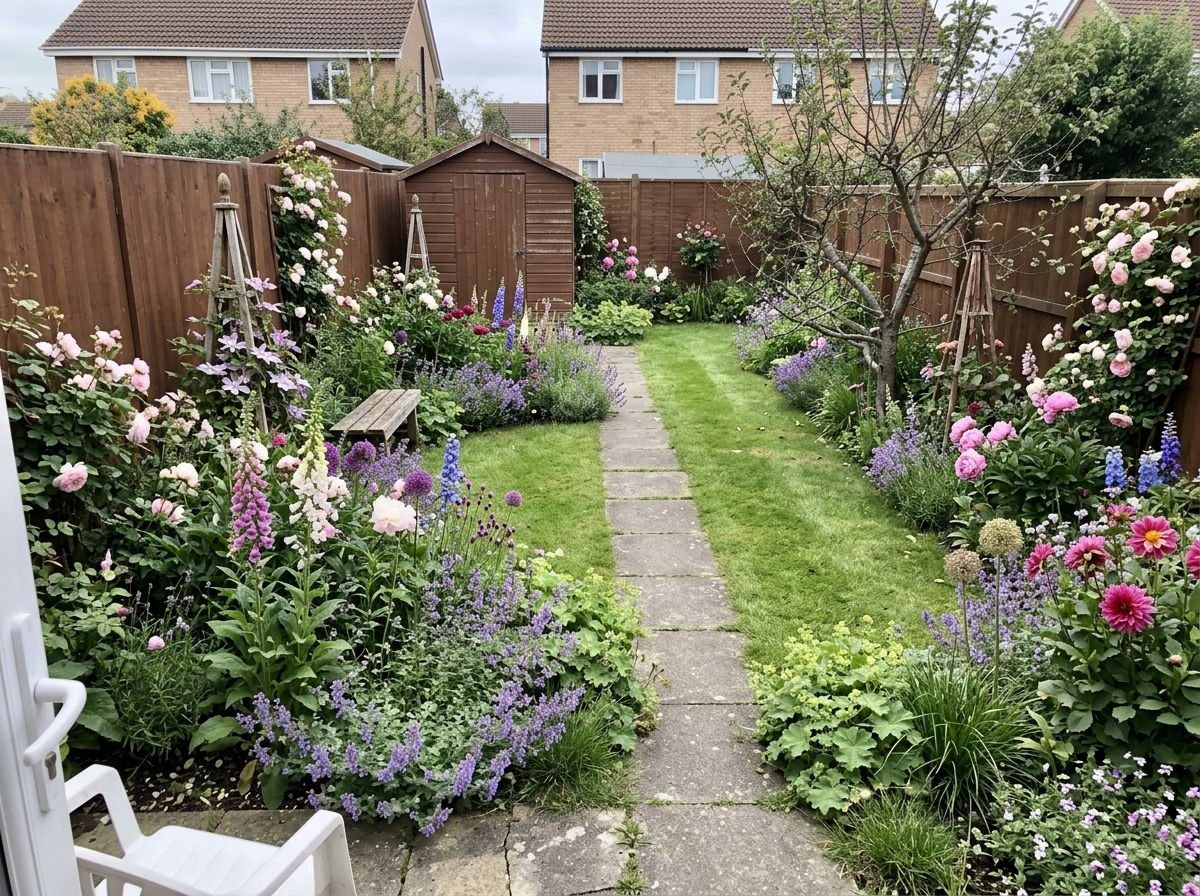
The cottage version does the opposite: as many flowers as the garden can hold. Borders on both sides, climbing roses on the fences and on wooden obelisks, foxgloves and catmint at the front, a bench tucked into the left border. The lawn shrinks to two strips beside the path.
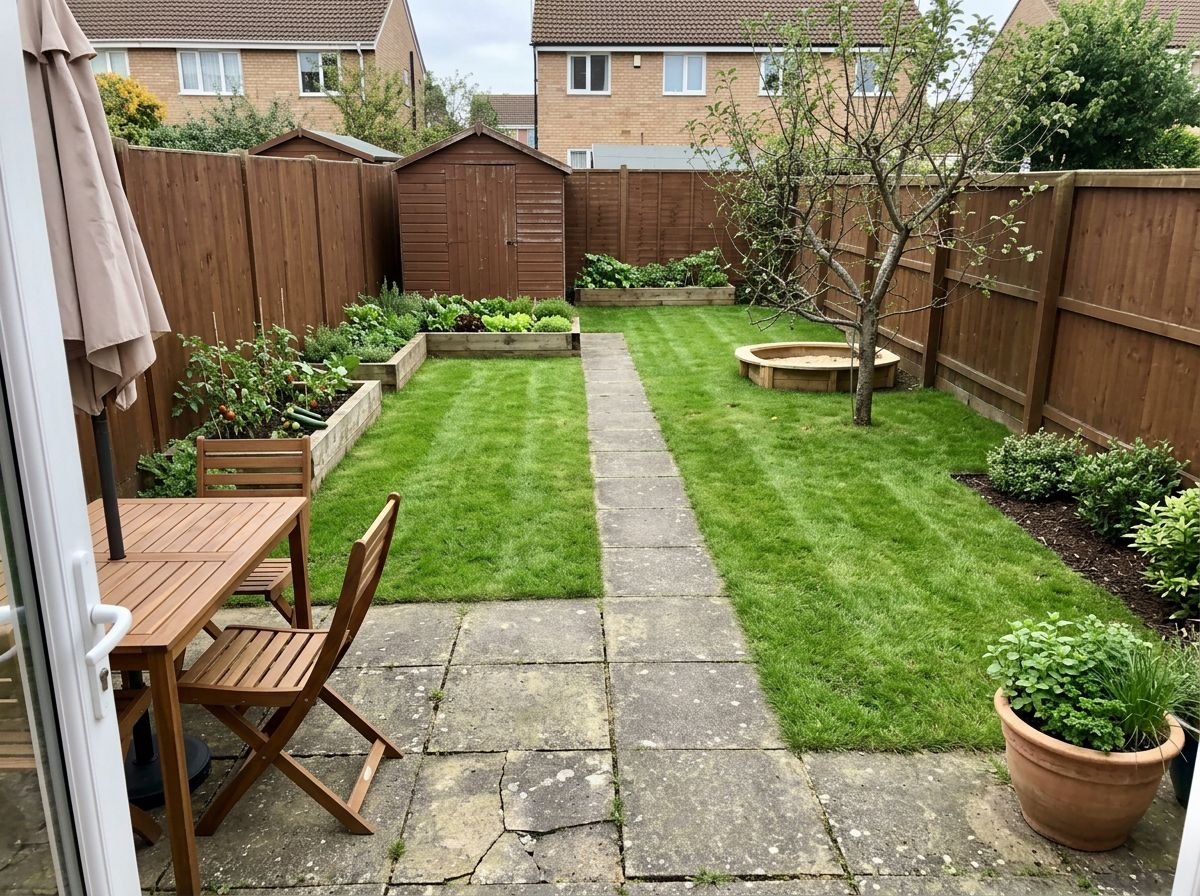
The family version keeps the garden open. The lawn is repaired and striped, three raised beds stand along the left fence and at the back, a round sandpit sits under the apple tree and the cracked patio becomes a dining spot with a table, chairs and a parasol.
Look at what did not change in any of the three. The fences, the shed with its door, the concrete path, the apple tree and the houses behind are where they were in the photo, and even the cracks in the patio slabs are still there. That is the difference between redesigning your garden and generating a pretty garden: you can stand at the back door and compare.
Step 2. A plant list for each zone of the garden
A picture shows a mood. To get the garden, you need names, sizes and numbers, and they depend on the place. A plant that thrives in sandy soil can drown in clay, and a rose in the shady corner will sulk. So we picked the cottage garden and gave the agent our conditions.
26 seconds, and every line here is the agent's own.
The useful part is how the list follows the garden, not a catalogue. The left bed, which loses the sun after 3 pm, got plants that like a cool afternoon: hydrangea 'Annabelle', astrantia, hardy geranium, foxgloves, hellebores and a fern. The ring around the apple tree got plants that cope with dry roots, plus spring bulbs that flower before the tree is in leaf. The narrow strips along the path got low plants that will not flop over the slabs: catmint, thyme, campanula. The patio, the warmest and most-used spot, got the scented ones: lavender, a shrub rose and honeysuckle.
Every line has the three numbers you need in a garden centre: height, flowering months and how many. The flowering months matter more than they look. Read the list by month and the garden starts with crocus and hellebores in February and ends with anemones, salvias and persicaria in October, so the borders are never all green at once.
The agent also answered the question we did not ask. Heavy clay is the first thing that kills lavender and catmint, so the list opens with how to plant into it: a wide hole backfilled with grit and compost, and the Mediterranean plants set slightly proud on a mound. It ends with an offer to turn the list into an order with pot sizes and an approximate cost, which is a good next message if you are ready to buy.
Step 3. What to plant now and what can wait
130 plants is a lot of work for one weekend, and in autumn not everything should go into the ground at once. We asked the question most people actually have.
16 seconds.
The answer splits the list in two by one rule, and the rule is the useful part. Bulbs need the winter cold, and hardy perennials, roses and shrubs root best while the soil is still warm, so they go in now. Lavender, perovskia, verbena and the other plants from warm, dry places would sit in cold wet clay all winter, so they wait for spring. The agent worked this out from the conditions in the previous message; we did not repeat them.
The three jobs for the weekend are small and in the right order: mark the beds, order what sells out, feed the soil. The last one comes with a warning that protects the one thing in the garden that took years to grow: no deep digging within a metre of the apple tree.
What we got from one phone photo
Three messages, under two minutes of the agent's work in total. From a photo of a bare back garden we got:
- three redesigns in different directions, with the same fences, shed, path and apple tree as the photo;
- a plant list for the chosen look, split into four zones by light and soil, with height, flowering months and quantities;
- a planting plan: what goes in this autumn, what waits until spring and three jobs for the first weekend.
Nothing was installed. There was no sign-up page, no style quiz, no plan to draw to scale. Each step was one message in the same chat as the rest of the conversation. The pictures can be redrawn the same way: Edit a photo with AI right in the chat: one phone shot, three edits, before and after shows how to change one detail and keep the rest.
How to ask so the garden stays your garden
The agent changes what you ask it to change. How you ask decides how much of your garden survives, and how well the plants suit it. A few habits from this test:
Shoot from where you usually stand. The back door, the kitchen window, the end of the patio. It is the view you will compare against every day, and from there one frame shows the fences, the path and most of the ground. Overcast daylight gives the cleanest picture: no hard shadows over the ground.
Say what stays before you say what changes. Fences, a shed, a path you are not going to dig up, a tree you love. Listing them draws a line around the work. The agent repeated our list back in its last line: fences, shed, path and apple tree in place.
Give the size in metres. A 6 × 15 m garden and a 20 × 30 m plot need different plants and different paths. One number in the first message saves a round of corrections.
Ask for contrast first, detail later. Three different directions in one message show you more about what you want than ten versions of one idea. Once you know the direction, refine it bed by bed.
Give the conditions before you ask for plants. Climate zone or city, soil, which way the garden faces and where the shade falls in the afternoon. With them the list is about your garden. Without them it is about gardens in general.
Ask for zones, not one long list. “Group it by zone of the garden” is what turned 32 names into four planting plans you can do one at a time.
Check each name before you buy. Take the list to a local nursery or garden centre and ask about your exact conditions. A nursery that knows your street knows things no picture shows, like which roses suffer from disease locally.
Which direction suits which garden
The three looks in our test change very different things, and it is worth knowing what each one asks of you before you choose.
Gravel and grasses is for the garden you want to enjoy, not tend. No mowing, little watering once the plants settle, one cut-back a year. It suits a sunny, dry or sloping plot and people who travel in summer.
Cottage garden is for the gardener. The most colour and scent for the space, and the most work: deadheading, staking, dividing. It suits a sunny garden and someone who likes to be out there every weekend.
Family garden is for living outside. A lawn that can take a ball, a table for dinner, beds for tomatoes and salad. It suits families with children and anyone who cooks.
You can ask for other directions too: a Mediterranean garden, a wildlife garden with a pond, a shade garden for a north-facing plot, a front garden with parking. Or describe a feeling instead of a style: “calm, green, somewhere to read in the evening”. If you only need a picture for a mood board or a post, not a plan for your plot, see An AI image generator inside your chat: six prompts and the pictures they made.
What stays with you
Your photos and the chat history stay in your agent's isolated container. To answer, the agent sends requests to the model: on the default model they go through DeepSeek's infrastructure in the People's Republic of China, which you confirm during onboarding, and on Pro you can attach your own Claude or Codex, so requests go to that provider under your own account. How the agent handles files, data and access is covered in Is an AI agent safe? 8 things to check before you let one into your chats.
What it costs
A garden picture on the default model costs 20 , and reading the photo you send costs 1.5 . The three redesigns came to 62 in one turn, as the agent's status line showed: three pictures, reading our photo and writing the reply. The plant list and the planting plan were ordinary text replies in the same conversation, fractions of a magnet each. The whole case came to about 65 , so the Free plan's first month covers it three times.
The Free plan gives 200 in the first month and 100 every month after, with no card. Pro costs $13.90 a month for 400 , or $1.39 for the first month if you subscribe within 7 days of signing up. All rates are on the pricing page.
Messages worth copying
This is my garden, about 6 by 15 metres. The fences, the shed and the tree stay. Show me three different ways it could look: low-maintenance, a cottage garden full of flowers and a family garden with a lawn. Same garden, same angle.
I like the second one. Make me a plant list for my conditions: [climate zone or city], [soil], the garden faces [direction], [where the shade falls]. Group it by zone, with height, flowering months and how many I need.
What should I plant this autumn and what can wait until spring? Tell me the first three things to do this weekend.
Turn the list into a planting order with pot sizes and an approximate cost.
Make one more version of the cottage garden with less lawn and a small gravel seating area by the shed.
Create your agent, stand at your back door with the phone and send the garden you have, with three gardens you are curious about.
Try it with your own agent
Free, no card. The agent starts working in the chat straight away.
Create your AI agentQuestions
Can AI redesign my actual garden from a photo?
Yes. Send a photo of the garden, say which looks you want to see and what must stay. In our test the agent returned three redesigns of a 6 × 15 m back garden in 70 seconds, each with the same fences, shed, concrete path and apple tree as in the photo.
Will it tell me what to plant?
Ask, and it will. We gave our conditions (USDA zone 7b, heavy clay, south-facing, shade on one bed after 3 pm) and got a list split into four zones of the garden: 32 plants with height, flowering months and how many to buy, about 130 plants and 100 bulbs in total, plus a tip on planting into clay.
What should I tell it about my garden?
The size in metres, what stays, your climate zone or city, the soil and where the sun and shade fall during the day. Our whole brief fit into two messages. The more precise the conditions, the more the list fits your garden and not a catalogue.
I can't redo the whole garden at once. Can it help me plan?
Yes. We asked what to plant in autumn and what can wait. The agent split the list: bulbs, hardy perennials, roses and shrubs now, lavender and the other plants that dislike wet clay in winter in spring, and gave three jobs for the first weekend.
Is it free?
On the Free plan, yes. Free gives 200 in the first month and 100 every month after, with no card. A generated picture on the default model costs 20 . Our whole test, three garden pictures, a plant list and a planting plan, came to about 65 .
Do I need a garden design app?
No. The agent starts in Telegram, and other messengers can be connected. You send the garden photo the way you send it to a friend, and the redesigns, the list and the plan come back in the same chat.