Chat case
AI thumbnail maker in a chat: three covers from one video title, one edit, and a square version for a post

A thumbnail is the frame people click on or scroll past. In this test we gave our WAM agent one video title, "Pancakes in 10 minutes", and asked for covers: three moods, one edit, a square version for a post, and the headline in Turkish and Arabic. All of it happened in one chat, the covers came back with the text already on them, and the whole session stayed well inside the Free plan. Below are the real messages and pictures.
The short answer
Yes, you can make a cover for a video or a post in a chat, with the headline already on it. Create a WAM agent, send the title and the mood in plain words, and you get three covers to choose from in about a minute. Point at one and ask for one change (bigger text, another color, a darker background) and the rest of the picture stays untouched.
The covers in this article were all drawn by our test agent on the default model, the one the Free plan runs on. If you want to edit a photo you already have instead of drawing a new scene, see Edit a photo with AI in a chat: 3 edits, before and after. If you want to learn how to describe a picture so the first version is already close, AI photo prompt: how to describe a picture in plain words is the place to start.
The test: one title, seven covers
On 15 November 2026 we sat a made-up person in front of our test agent: Maya, who runs a small cooking channel and just filmed a pancake video. Everything the agent replied and every picture it sent back below is real, quoted as it arrived. Only Maya herself is made up.
One detail matters before the first message: a cover is not a picture with text added later. The headline has to be readable on a phone screen, in a feed, next to a play button. So every request in this test says two things: the exact words of the title, and the format.
Step 1. Three covers, three moods
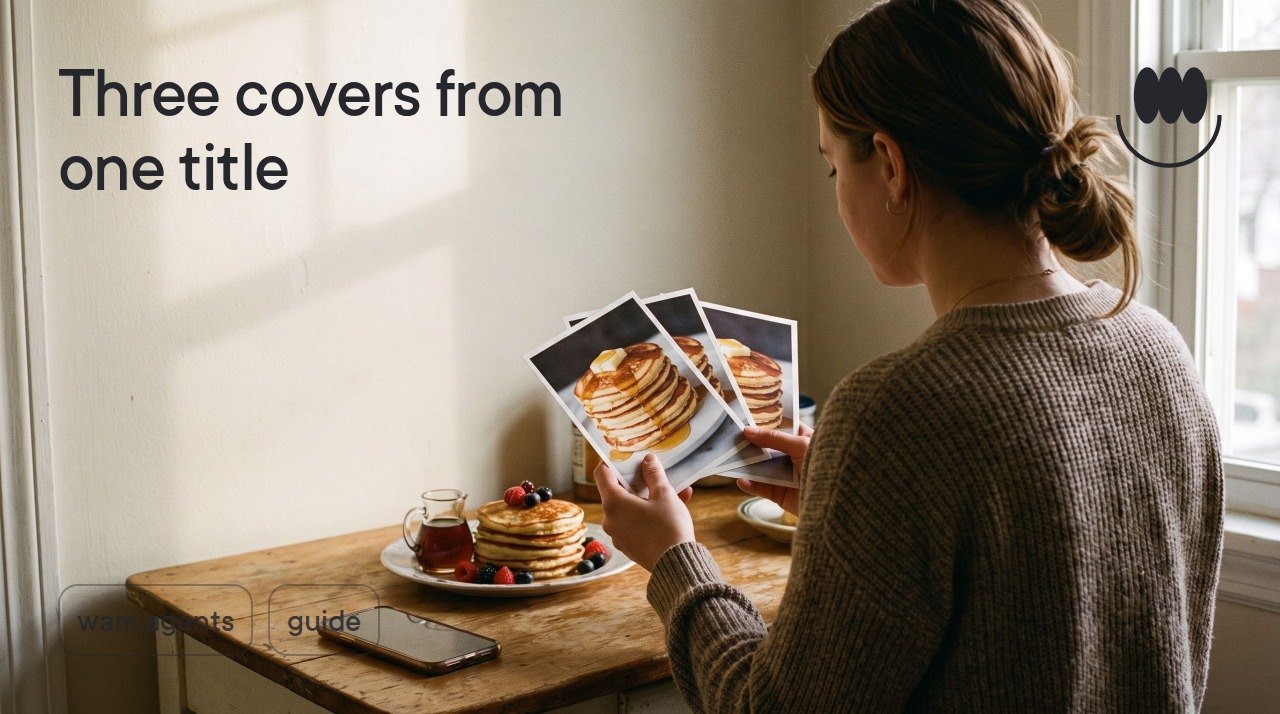
Maya asks for three variants at once. Naming the moods in plain words (bright and cozy, bold, minimal) gives the agent three different directions instead of three copies of the same idea.
Three covers arrived in 72 seconds, and the words on all three are the ones from the title, checked, not guessed. The 20 in the status line is the price of one drawing: three covers are three drawings, so step 1 cost 60 .
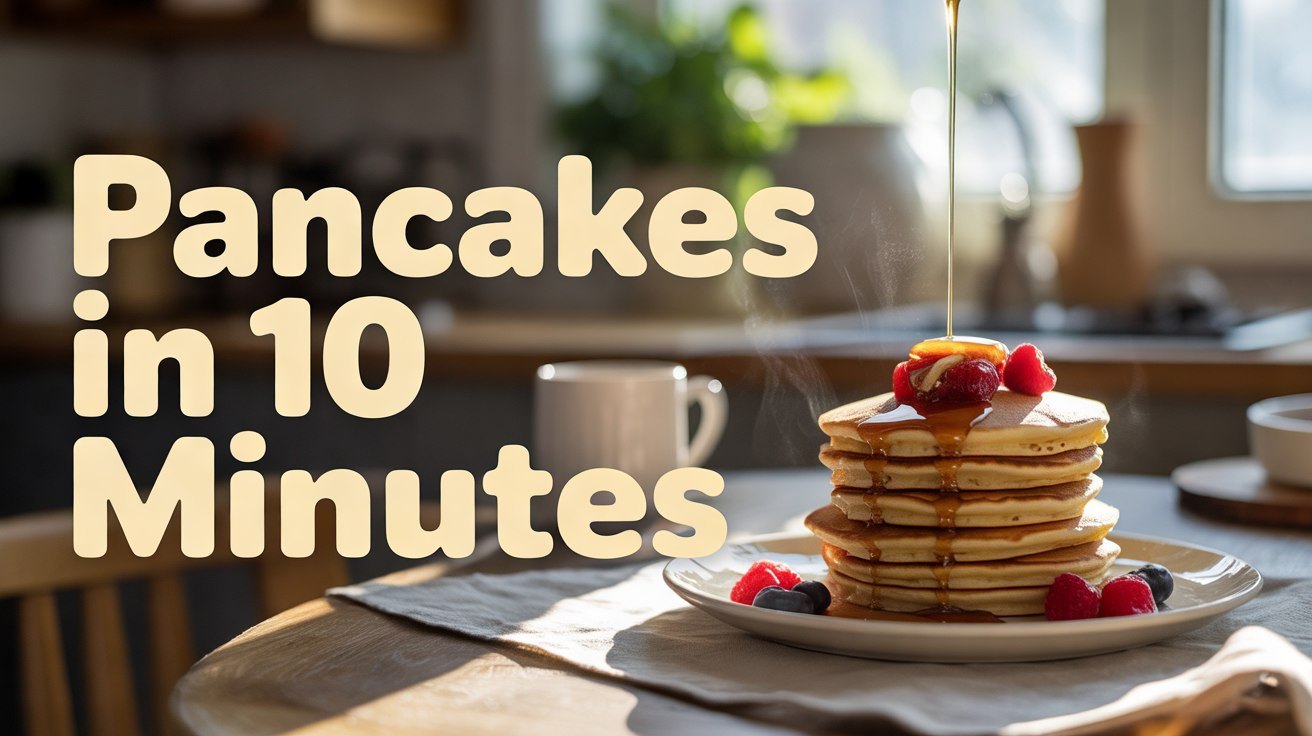
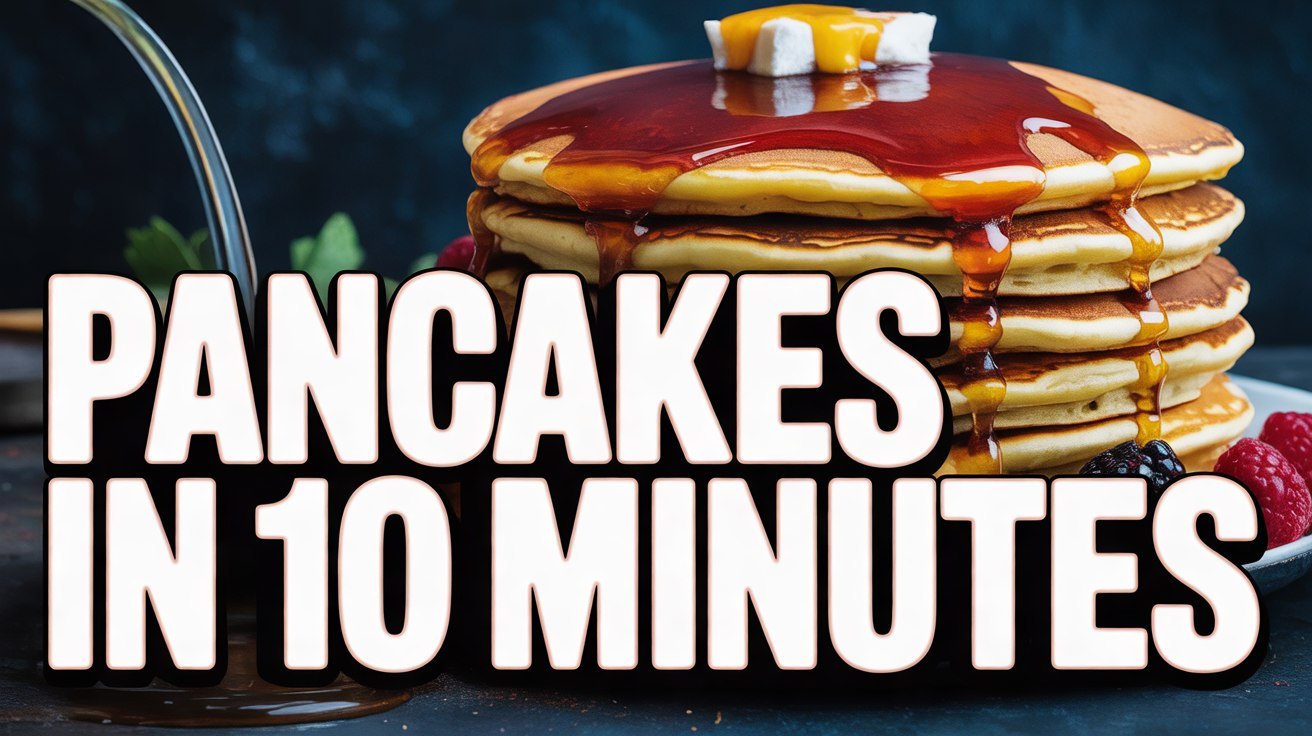
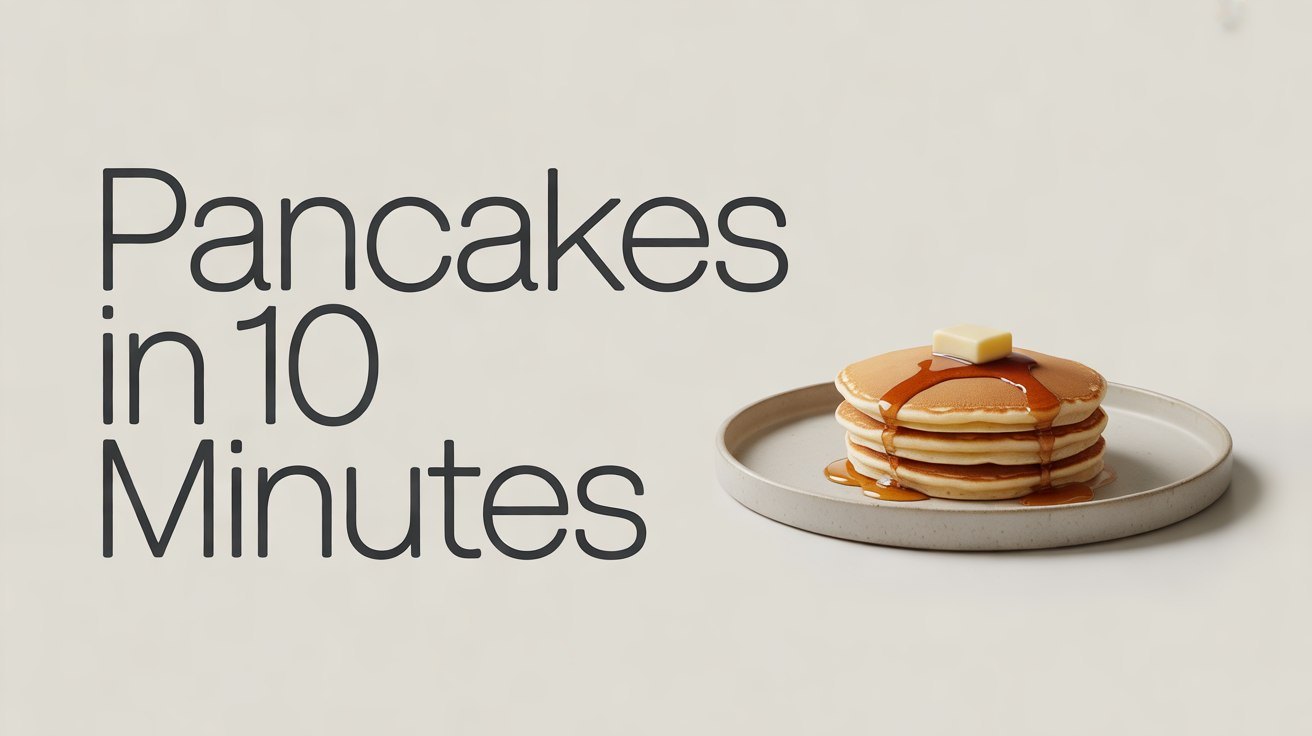
Look at what is different between them and what is not. All three show the same dish, and all three hold the headline where a feed crop will not eat it. What changes is the promise the cover makes: morning comfort, a loud claim, a quiet recipe. That is what "mood" means in a request: not an art direction, but the feeling a scroller should get in half a second.
The agent closed the turn with the right next step: pick a direction and it will refine. A channel settles on one of these and the rest of the visual identity follows from there.
Step 2. One cover, one change
Maya takes the bold cover and asks for one targeted edit with three points: a bigger headline, in yellow, a darker background. This is how you keep control of a cover: one targeted edit per message, everything else stays.
The revised cover came back 72 seconds later. The stack of pancakes is the same one: same angle, same berries, same pour of syrup caught mid-air. What changed is exactly the list: the headline is bigger, it is yellow, the background is darker. The headline is set in caps, "PANCAKES IN 10 MINUTES", while the request said "Pancakes in 10 minutes": the words and spelling are exact, only the casing differs.
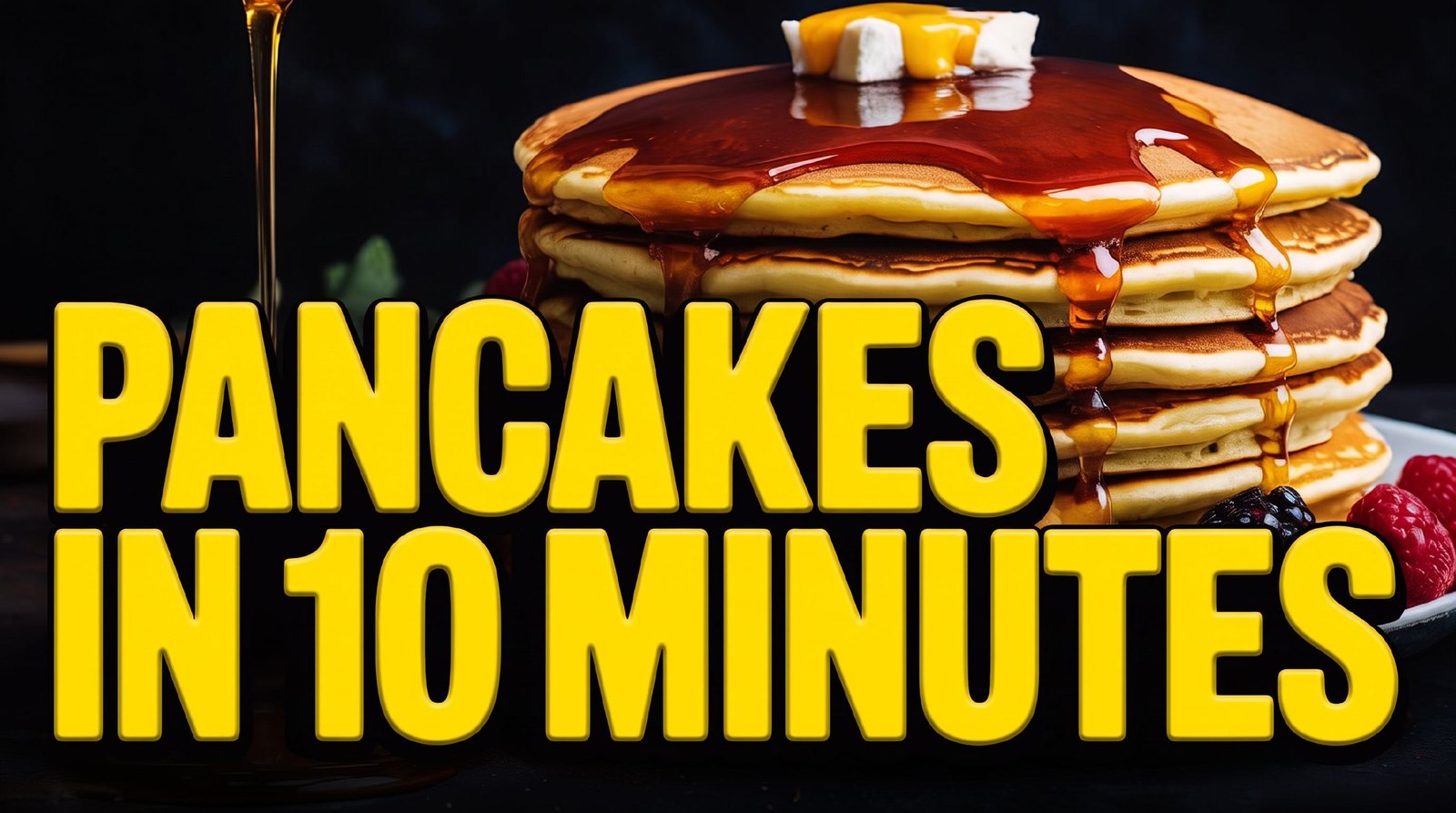
Notice the sentence "built directly from cover 2". The chat already held three pictures, and the agent knew which one to start from. That is why the session stays in one chat: every cover so far is material for the next request.
Step 3. The square version for a post
A YouTube cover is 16:9. A post in a feed is square. Same video, second format. One more sentence.
The square cover is not a cropped wide one. The agent rebuilt the layout for 1:1 and said so: the stack grew a pancake, the headline stayed in the left third where a feed crop leaves it alone.
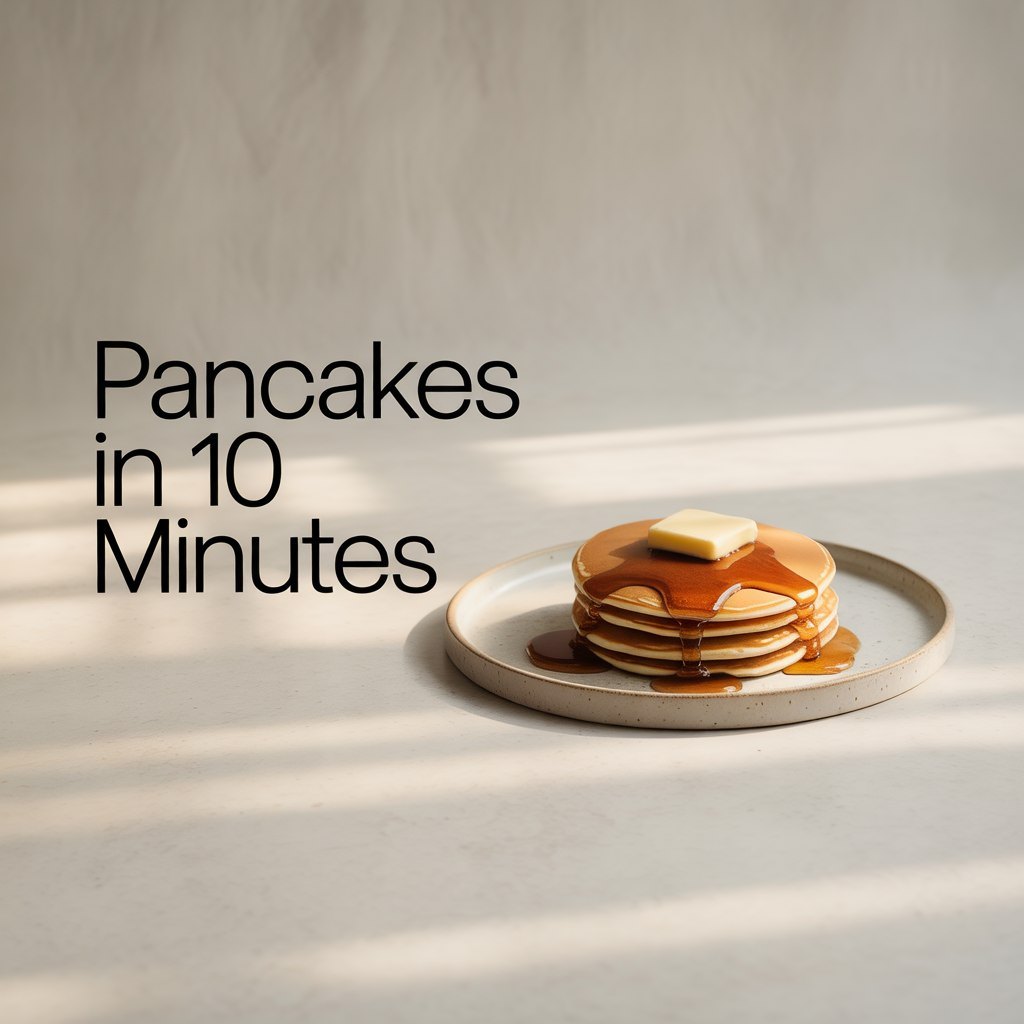
That is the difference between a resize and a rework. A cropped 16:9 would have cut the headline in half; the rebuilt square reads the way the wide one does. If you post both on the same day, they look like one shoot — because the agent carried the style, the plate and the light across formats.
Step 4. A cover in your language
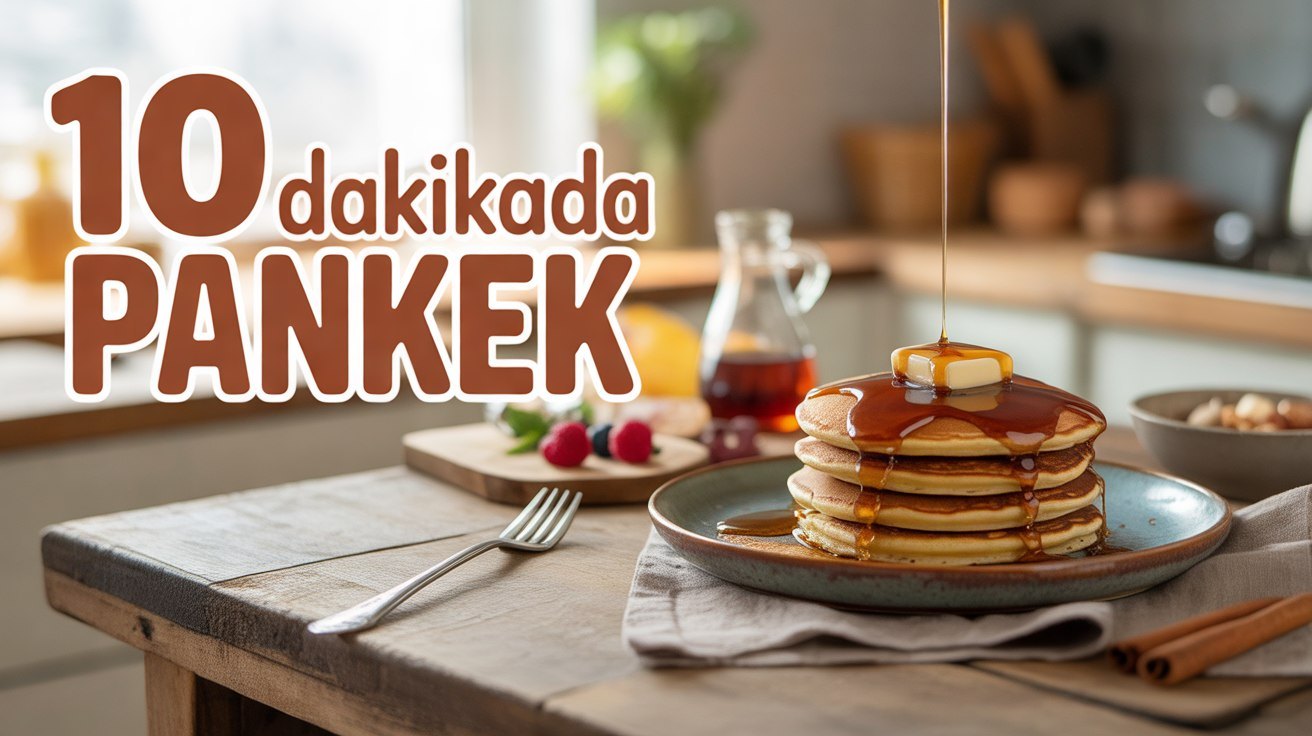
Titles travel. A video made in one language often gets a cover in another: for a second channel, a local community, a market you publish for. We asked for the same cover with the headline in Turkish, then in Arabic.
The Turkish headline is right, and the agent flagged the one choice a designer would flag: it set "dakikada" in lowercase and "PANKEK" in caps for the look, and offered to switch to exact title case. Casing is a design decision; spelling is not.
Then Arabic, the harder script, written right to left, with letters that change shape as they connect.
Read that middle part again, because it is the most valuable sentence in this test. The picture model's first try wrote the wrong word: "baklava" instead of "pancakes". The agent caught it, discarded the picture, and typeset the correct words onto a clean photo, letter by letter, then proof-read them. What could have shipped as a funny typo shipped as a cover with the right words on it.
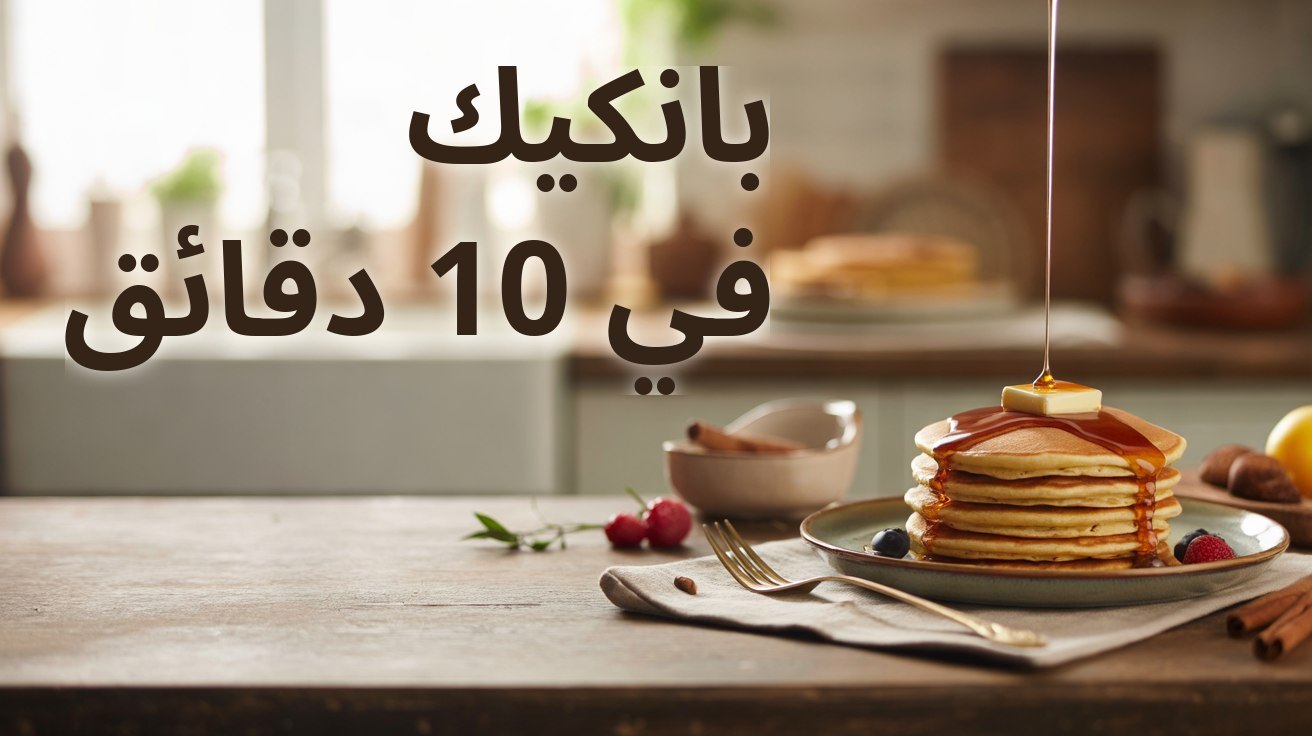
The lesson for any cover with a non-Latin headline: the words on the picture deserve one extra look, and an agent that reads the result back to you before sending is the right tool for it.
What we got from one sentence
One title, five messages, seven usable covers:
- three 16:9 moods to pick a direction from;
- one revised cover with exactly the requested changes;
- one square 1:1 rebuild for a post;
- one Turkish and one Arabic cover with the headlines checked.
Nothing here needed a template site, a design app or a stock photo account. The brief each time was one sentence a channel owner could dictate while the pancakes are still on the stove. If you want to go further (a cover style held across a whole series, or covers for every episode of a backlog), the same chat holds the whole history, and the agent keeps the style you settled on.
Four requests that waste a cover
Most disappointing covers trace back to the request, not the drawing. These four waste the most:
- No exact title in the request. "Make a cover about fast pancakes" gets you a nice picture with a headline you never asked for. Paste the title in quotes, word for word, every time.
- No format. A wide cover in a square feed gets cropped by the platform, not by you. Say 16:9, 1:1 or 9:16 in the message.
- Five changes in one message. "Bigger, warmer, add my logo, change the plate, more berries" leaves you unable to tell which change hurt. One targeted edit per message.
- Trusting a script you don't read. If the headline is in a script you don't know, ask the agent to read it back to you before you post it. Ours did that on its own: with baklava instead of pancakes one version away from shipping.
What stays yours
The agent draws and checks; the decisions stay with you. You pick the direction, approve the casing, check that the cover matches the video it promises, and upload it. The cover is yours to post anywhere: there is no watermark and no logo added. And the style you settle on lives in the chat: next week you send a new title and the covers come back in the same look.
What it costs
All the covers in this article were drawn on the default model, the one every plan runs on. Here is the arithmetic from the pricing page on 15 November 2026:
| Job | Magnets |
|---|---|
| One generated cover on the default model | 20 |
| Three covers in one message | three drawings, 20 each |
| A redraw after your edit | a new drawing, 20 |
| Reading the result to check the headline | a fraction of a magnet |
| The first reply of a new session, the agent reads its setup | 3–4 |
The Free plan has no card and no end date: 200 in the first month covers up to 10 covers, and 100 every month after covers 5. Our whole test — three covers, one revision, a square rebuild and two language versions — is seven covers plus the discarded first Arabic try, eight drawings at 20 : about 160 of 200, so it fits inside one free month. The spend counter sits in the status line under each reply, so the price of a cover is never a surprise. If a month runs long, Pro adds four times the monthly magnets, and top-ups never expire.
I run a [topic] channel. My video is titled "[exact title]". Make me THREE different 16:9 covers, each with the title as a large readable headline. Moods: [three moods in plain words].
I like the second one. New version: the headline bigger and in [color], the background darker, same picture. Keep 16:9.
Take the third cover and make a square 1:1 version for a post — same style, headline readable on a phone.
Same cover, but the headline in [language]: "[exact words]". Keep it large and readable.
Read the text on the cover back to me before I post it, letter by letter.
Open the bot, create your agent in a minute, and paste the first prompt with your own title — the three covers will be waiting before the kettle boils.
Try it with your own agent
Free, no card. The agent starts working in the chat straight away.
Create your AI agentQuestions
Can an AI thumbnail maker put my title on the cover?
Yes, and it spells it the way you give it. In our test the agent checked the text on every cover and confirmed the spelling in its reply. For non-Latin scripts it proof-reads the result and retypes the headline letter by letter if needed: the Arabic cover in this test was typeset and proof-read before it was sent.
What size are the covers?
Say the format in the request and the agent draws in it. Our 16:9 covers came back at 1312 × 736 pixels, which fits the YouTube thumbnail area, and the square version for a post came back at 1024 × 1024. The agent also keeps the headline inside the safe area, so nothing is cut by the play button or the feed crop.
How many thumbnails can I make for free?
On the default model a generated image costs 20 . The Free plan gives 200 in the first month, so it covers up to 10 covers, and 100 every month after covers 5. Three variants in one message are three drawings, 60 . The counter shows the spend in the status line after each reply.
Will it match my channel's style?
Describe the mood in plain words and the agent holds it: bright and cozy, bold and high-contrast, minimal. After the first round you can point at one cover and ask for one change, like a bigger headline or a darker background, and the rest of the picture stays as it was.
Does it work for covers in Turkish or Arabic?
Yes. We asked for the same cover with a Turkish and an Arabic headline, and both came back readable, with the text checked. Give the exact wording of the headline, and if the casing or the phrasing matters to you, say so: the agent adjusts the type, not the photo.
Do I need a design tool or a template site?
No. The agent starts in Telegram and other messengers can be connected. You write the title and the mood the way you would explain it to a friend, and the covers come back in the same chat as ordinary pictures you can forward anywhere.